
← Back to the Steadfast Literal Bible
Faith and Bible resources
The Faith Made Plain
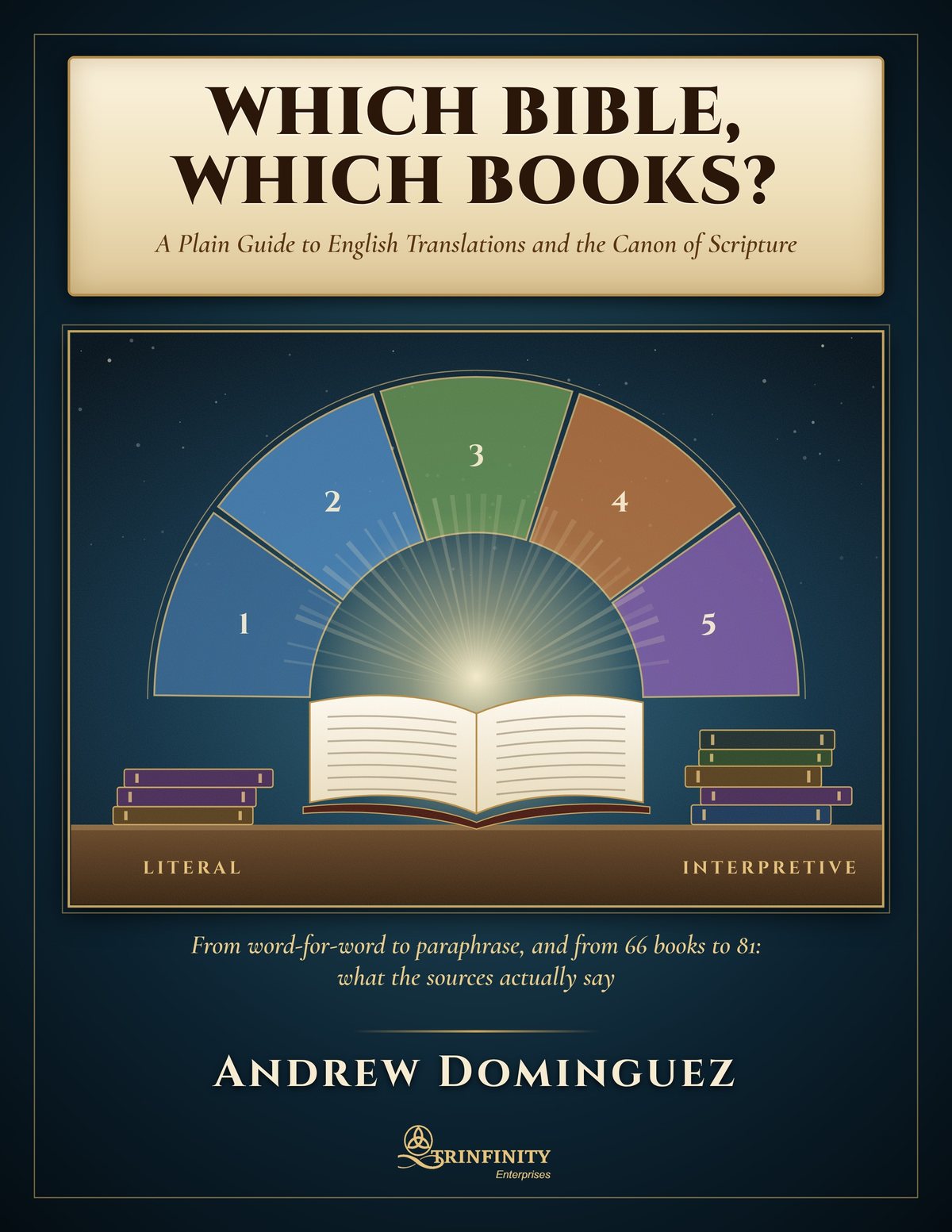
Which Bible, Which Books?
A Plain Guide to English Translations and the Canon of Scripture
Opens in a new tab. Use your browser's download or save button to keep a copy.
There are two questions I hear more than almost any others when the subject turns to the Bible. "Which Bible should I read?" And, a little quieter: "Why does my friend's Bible have more books in it than mine?"
Which Bible, Which Books? answers both in plain words. Part 1 covers translations: how we got an English Bible, word-for-word and thought-for-thought translating, where the main Bibles sit on that scale, and how to choose one. Part 2 covers the canon: what the word means, how the Hebrew Scriptures and the 27 New Testament books were recognized, the Apocrypha question, the Ethiopian canon, books like Enoch and Jasher, and the myths that won't die.
I went to the sources for this one: the published translation guides, what the publishers say about their own Bibles, and the church documents themselves. Then I lined it all up side by side so you can check it for yourself.
Chapter 6, “The Bible I Read and Quote,” explains the Steadfast Literal Bible and why I made it, and Chapter 4 sets the SLB side by side with other Bibles on the same verses.
What's inside
- 16 short chapters in two parts, Translations and Canon
- A translation table, a canon comparison and a canon timeline in the appendices
- The free handouts below, for classes and small groups
More free downloads
Comparison Brochure
Mini Reference Pamphlet
Choosing a Bible: From Literal to Interpretive
Bible Translations and Canon - Printer-Ready Guide
Bible Translations and Canon - Book Brochure
About This Book
Part 1 covers translations: how we got an English Bible, how translations differ, and how to choose one. Part 2 covers the canon: how the Old and New Testament books were recognized, the Apocrypha question, the Ethiopian canon, and books like Enoch and Jasher.